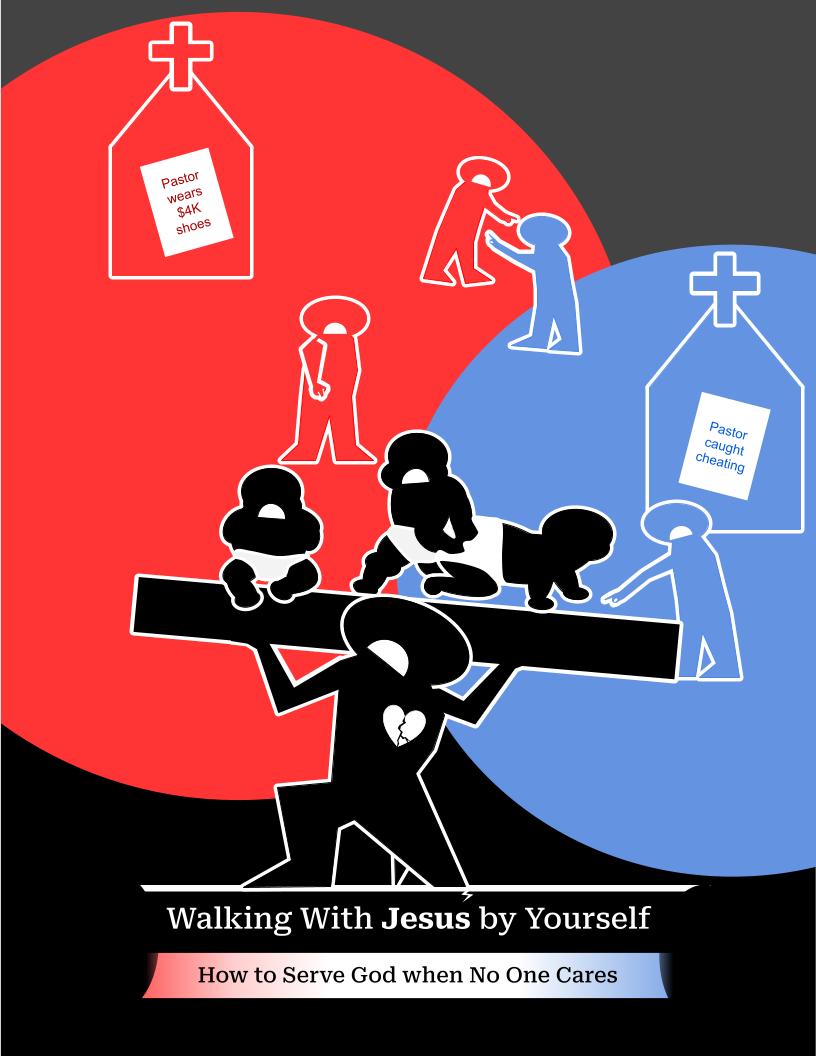
How to Serve God when No One Cares
By Sean Launey
A book for Christians who want to grow but can’t or don’t want to go to church. It guides the reader into growth, using the map of growth found in 2 Peter 1:3-11:
- Faith has to do with more than just salvation. It is the only virtue on this list that cannot be grown because faith will always be difficult when it counts most.
- Goodness is a life that is completely surrendered to God. Faith is not all that is required for salvation, but also repentance. You cannot become more holy by effort, but simply by repenting when God reveals your sin to you as you continue to walk with Him, trusting in His power to help you keep your word.
- Knowledge is not always godly, even when it appears to be. You cannot grow in knowledge by studying, but through being obedient to God –just as you can only be obedient (goodness) through faith. Each one of these values depends on the value before it for growth. The author also indulges the reader in a crash course in Bible, theology, and life-application.
- Self-control (Temptation): Self-control is just goodness despite temptation. Growing in self-control is accomplished through growth in God-given knowledge, which is written plain-as-day in the Bible but hidden by our choice to doubt.
- Endurance (Joy): Endurance is just faith despite temptation. Technically, endurance and self-control cannot be grown. But to sustain endurance, believers must be disciplined in prayer, tame the tongue to encourage and not complain, and seek out Christian voices. The author notes that endurance is only half of joy, with the other half being gratefulness.
- Godliness (Anxiety): A godly person is a person who, when you think of them, you are reminded of God. Jesus gives a very clear answer for anxiety related to our physical needs in Matthew 6, but the author argues that the cure for anxiety about guilt and other people’s opinions is godliness. To grow in godly boldness, you must be filled with the assurance of hope (endurance). The author introduces the idea that all of these values in 2 Peter 1:3-11 are connected to one another and necessary for the growth of each.
- Brotherly affection is love between two Christians. The Apostle Peter is also implying that it is love towards a person who treats you well. Sean confronts the disparity caused by our lived experience: Christians are actually often the ones who mistreat us. Sean shows that Jesus’ teachings teach us to love Christians differently than nonbelievers. Love for believers is supposed to primarily spring from our love for God (godliness). Sean still experiences the pain of being disappointed by other believers, but presses on anyway, choosing to believe God’s Word. Love for nonbelievers and offenders is supposed to primarily spring from a good, challenging relationship with supportive believers.
- Love: The word for love here is agape, which in this context implies unconditional love, love for people who mistreat you, and love for nonbelievers. The author says that the key to growth in this is found in the story of the woman who poured perfume on Jesus’ feet.